WHAT IS BLINCYTO® (blinatumomab)?
BLINCYTO® is a prescription medicine used to treat adults and children 1 month and older with:

B-cell precursor acute lymphoblastic leukemia (ALL) in remission when only a small number of cancer cells remain in the body (minimal residua …read more

BLINCYTO® is a prescription medicine used to treat adults and children 1 month and older with:

B-cell precursor acute lymphoblastic leukemia (ALL) in remission when only a small number of cancer …read more

BLINCYTO® for Adults Give yourself a better chance against B-cell precursor acute lymphoblastic leukemia (BCP-ALL)

Not actual patients.

In a trial of adults with Philadelphia chromosomeAn abnormal fusion of 2 genes that can cause immature white blood cells to grow uncontrollably and build up in the bone marrow and blood. If the Philadelphia chromosome is present, then the cancer is known as Ph(+). If it is not present, it is known as Ph(–).–negative [Ph(–)] BCP-ALLA fast-growing type of leukemia (blood cancer) in which too many immature white blood cells are found in the bone marrow and blood. after initial treatment (at consolidationA phase of treatment given after cancer has disappeared following the initial therapy. Consolidation therapy is used to kill any cancer cells that may be left in the body.)

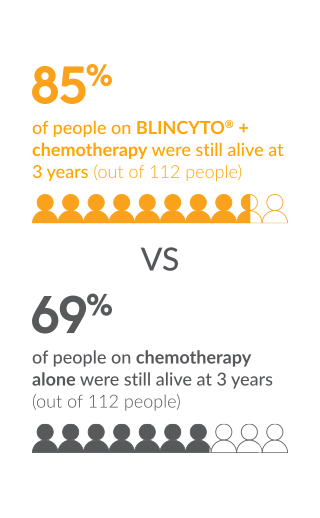
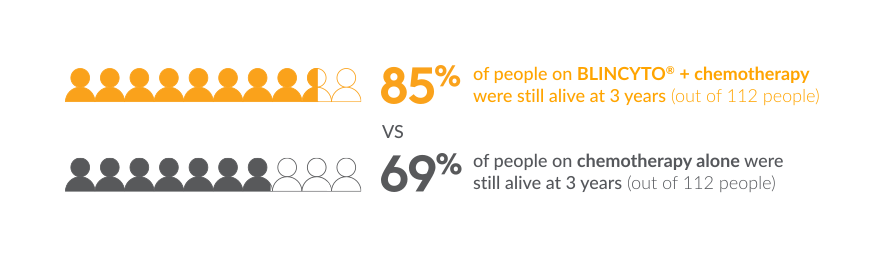
Treatment with BLINCYTO® and chemotherapy helped people who were MRD-negative live longer1,2

BLINCYTO® was studied in 224 adults aged 30–70 years with newly diagnosed Ph(–) BCP-ALLA fast-growing type of leukemia (blood cancer) in which too many immature white blood cells are found in the bone marrow and blood.. The goal of the study was to see whether people who were MRD"MRD-positive" means that a relatively small number of cancer cells remain in the body during or after treatment; "MRD-negative" means that cancer cells cannot be detected in the body by traditional diagnostic techniques.-negative lived longer when BLINCYTO® was used with chemotherapyA treatment that stops the replication of fast-growing cells throughout the body, like cancer cells, either by killing the cells or by stopping them from dividing. It is often called “chemo”. vs chemotherapyA treatment that stops the replication of fast-growing cells throughout the body, like cancer cells, either by killing the cells or by stopping them from dividing. It is often called “chemo”. alone (112 people in each group), after initial treatment. This period of treatment is known as the consolidationA phase of treatment given after cancer has disappeared following the initial therapy. Consolidation therapy is used to kill any cancer cells that may be left in the body. phase.1,2

At 3 years, treatment with BLINCYTO® and chemotherapy helped people live longer vs chemotherapy alone1,*

*This analysis looked at survival for a median follow-up of 3.6 years, and the proportion of people alive at 3 years was estimated.1

In this study, most people (57%) were given 4 cycles of BLINCYTO®.3

Your doctor will decide how long you will stay on treatment.4

I’m a real BLINCYTO® patient. And this is my story.

–Ryan

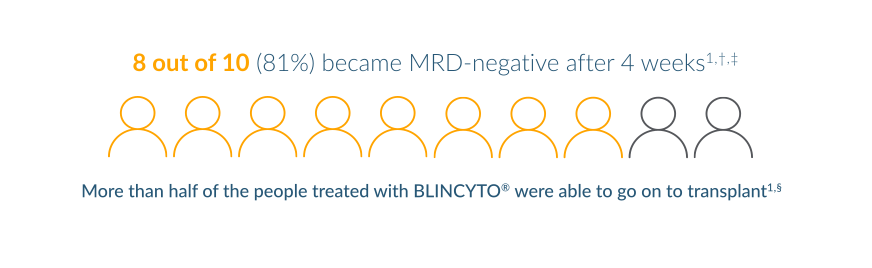
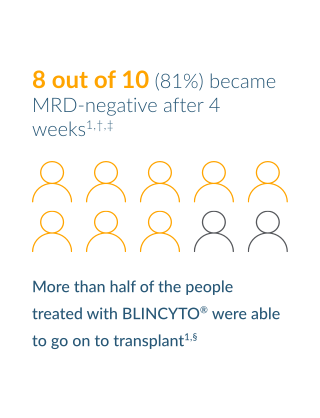
In another trial, BLINCYTO® was given to 86 adults who were MRD"MRD-positive" means that a relatively small number of cancer cells remain in the body during or after treatment; "MRD-negative" means that cancer cells cannot be detected in the body by traditional diagnostic techniques.-positive after chemotherapyA treatment that stops the replication of fast-growing cells throughout the body, like cancer cells, either by killing the cells or by stopping them from dividing. It is often called “chemo”.. This means that there were remaining leukemiaA type of cancer that starts in blood-forming tissue, such as the bone marrow, and causes large numbers of abnormal blood cells to be produced and enter the bloodstream. cells in their body. The goal was to become MRD-negative so there were no detectable traces of leukemiaA type of cancer that starts in blood-forming tissue, such as the bone marrow, and causes large numbers of abnormal blood cells to be produced and enter the bloodstream. left.1

BLINCYTO® helped most people who were MRD-positive become MRD-negative1,*

*As measured by a test that can detect 1 cancer cell out of 10,000 cells in the bone marrow.1 (More sensitive testing methods may be able to detect lower levels of cancer cells).1,5

Adults studied had at least 3 rounds of chemotherapy prior to treatment with BLINCYTO®. They were in complete remission either for the first or second time. Remission is a response to treatment where signs of cancer have disappeared, but this does not always mean the cancer is cured.1,6

One cycle of treatment with BLINCYTO® consists of four weeks of treatment followed by two weeks without treatment.1

§59 out of 86 people treated with BLINCYTO® in the study proceeded to a stem cell transplant.1

In a separate study, BLINCYTO® was tested in 405 adults with Ph(–) BCP-ALLA fast-growing type of leukemia (blood cancer) in which too many immature white blood cells are found in the bone marrow and blood. that had returned (relapsedThe return of a disease or the signs and symptoms of a disease after a period of improvement.) or did not respond to treatment (refractoryWhen a disease does not respond to treatment.) against commonly prescribed chemotherapyA treatment that stops the replication of fast-growing cells throughout the body, like cancer cells, either by killing the cells or by stopping them from dividing. It is often called “chemo”.. Out of these 405 adults, 271 were treated with BLINCYTO® and 134 were treated with chemotherapyA treatment that stops the replication of fast-growing cells throughout the body, like cancer cells, either by killing the cells or by stopping them from dividing. It is often called “chemo”..1

BLINCYTO® helped people live longer1,*

People treated with BLINCYTO® lived nearly twice as long1

7.7 months (median OS) with BLINCYTO® vs 4.0 months with chemotherapy.

What's more, when treated after first relapse, people on BLINCYTO® had a median survival* of 11.1 months vs those on chemotherapy who had a median survival of 5.5 months.7

*Median overall survival is defined as the length of time from the start of treatment to when half of the patients in the treatment group are still alive.6

Summary
+

See how BLINCYTO® (blinatumomab) treatment helped adults with acute lymphoblastic leukemia (ALL) live longer—including those who were minimal residual disease (MRD) negative and those whose ALL had returned or didn’t respond to initial treatment.

Important Safety
Information

What is the most important information I should know about BLINCYTO®?

  • Call your health care provider or get emergency medical help right away if you get any of the symptoms listed below:
    • BLINCYTO® may cause serious side effects that can be severe, life-threatening, or lead to death, including:
      • Cytokine Release Syndrome (CRS) and infusion reactions. Symptoms of CRS and infusion reactions may include: fever, tiredness or weakness, dizziness, headache, low blood pressure, nausea, vomiting, chills, face swelling, wheezing or trouble breathing, and skin rash.
      • Neurologic problems. Symptoms of neurologic problems may include: seizures, difficulty in speaking or slurred speech, loss of consciousness, trouble sleeping, confusion and disorientation, loss of balance, headache, difficulty with facial movements, hearing, vision, or swallowing, and tremors. People with Down Syndrome may have a higher risk of seizures with BLINCYTO® treatment and may be given anti‑seizure medicine before starting BLINCYTO® treatment.
    • Your health care provider will check for these problems during treatment with BLINCYTO®. Your health care provider may temporarily or completely stop your treatment with BLINCYTO® if you have severe side effects.

Who should not receive BLINCYTO®?

  • Do not receive BLINCYTO® if you are allergic to blinatumomab or to any of the ingredients of BLINCYTO®.

Before receiving BLINCYTO®, tell your health care provider about all of your medical conditions, including if you or your child:

  • have a history of neurological problems, such as seizures, confusion, trouble speaking or loss of balance
  • have Down Syndrome
  • have an infection
  • have ever had an infusion reaction after receiving BLINCYTO® or other medications
  • have a history of radiation treatment to the brain, or chemotherapy treatment
  • are scheduled to receive a vaccine. You should not receive a “live vaccine” within 2 weeks before you start treatment with BLINCYTO®, during treatment, and until your immune system recovers after you receive your last cycle of BLINCYTO®. If you are not sure about the type of vaccine, ask your health care provider.
  • are pregnant or plan to become pregnant. BLINCYTO® may harm your unborn baby. Tell your health care provider if you become pregnant during treatment with BLINCYTO®.
    • If you are able to become pregnant, your health care provider should do a pregnancy test before you start treatment with BLINCYTO®.
    • Females who are able to become pregnant should use an effective form of birth control (contraception) during treatment with BLINCYTO®, and for 48 hours after your last dose of BLINCYTO®.
  • are breastfeeding or plan to breastfeed. It is not known if BLINCYTO® passes into your breast milk. You should not breastfeed during treatment with BLINCYTO® and for 48 hours after your last dose.

Tell your health care provider about all the medicines you take, including prescription and over-the-counter medicines, vitamins, and herbal supplements.

What should I avoid while receiving BLINCYTO®?

  • Do not drive, operate heavy machinery, or do other dangerous activities while you are receiving BLINCYTO® because BLINCYTO® can cause neurological symptoms such as dizziness, seizures, and confusion.

BLINCYTO® may cause serious side effects, including:

  • Infections. BLINCYTO® may cause life-threatening infections that may lead to death. Tell your health care provider right away in case you develop any
    signs or symptoms of an infection.
  • Tumor Lysis Syndrome (TLS). TLS is caused by the fast breakdown of cancer cells. TLS can be life-threatening and may lead to death. Tell your
    healthcare provider right away if you have any symptoms of TLS during treatment with BLINCYTO®, including: nausea and vomiting, confusion,
    shortness of breath, irregular heartbeat, dark or cloudy urine, reduced amount of urine, unusual tiredness, muscle cramps.
  • Low white blood cell counts (neutropenia). Neutropenia is common with BLINCYTO® treatment and may sometimes be life-threatening. Low white blood cell counts can increase your risk of infection. Your health care provider will do blood tests to check your white blood cell counts during
    treatment with BLINCYTO®. Tell your health care provider right away if you get a fever.
  • Abnormal liver blood test. Your health care provider will do blood tests to check your liver before you start BLINCYTO® and during treatment with BLINCYTO®.
  • Inflammation of the pancreas (pancreatitis). Pancreatitis may happen in patients treated with BLINCYTO® and corticosteroids. It may be severe and
    lead to death. Tell your health care provider right away if you have severe stomach-area pain that does not go away. The pain may happen with or without nausea and vomiting.
  • Your health care provider will do blood tests during treatment to check for side effects.

The most common side effects

  • The most common side effects of BLINCYTO® include:
    • Fever
    • Reactions related to infusion of the medicine such as face swelling, low blood pressure, and high blood pressure (infusion-related reactions)
    • Headache
    • Infection
    • Muscle, joint, and bone pain
    • Low white blood cell count (neutropenia)
    • Nausea
    • Low red blood cell count (anemia)
    • Low platelet count (thrombocytopenia)
    • Diarrhea

These are not all the possible side effects of BLINCYTO®.

Call your health care provider for medical advice about side effects. You may report side effects to FDA at 1-800-FDA-1088.

Please read the accompanying Medication Guide before you or your child receives BLINCYTO® and before each BLINCYTO® infusion and discuss it with your doctor.

Please see BLINCYTO® full Prescribing Information, including BOXED WARNINGS and Medication Guide.

Important Safety Information

What is the most important information I should know about BLINCYTO®?

  • Call your health care provider or get emergency medical help right away if you get any of the symptoms listed below:
    • BLINCYTO® may cause serious side effects that can be severe, life-threatening, or lead to death, including:
      • Cytokine Release Syndrome (CRS) and infusion reactions. Symptoms of CRS and infusion reactions may include: fever, tiredness or weakness, dizziness, headache, low blood pressure, nausea, vomiting, chills, face swelling, wheezing or trouble breathing, and skin rash.
Reference: 1. BLINCYTO® (blinatumomab) prescribing information, Amgen. 2. Litzow MR, Sun Z, Mattison RJ, et al. Blinatumomab for MRD-negative acute lymphoblastic leukemia in adults. N Engl J Med. 2024;391:320-333. 3. Gupta S, Rau RE, Kairalla JA, et al. Blinatumomab in standard-risk B-cell acute lymphoblastic leukemia in children. N Engl J Med. 2025;392:875-891.
References: 1. BLINCYTO® (blinatumomab) medication guide, Amgen. 2. National Cancer Institute. Common terminology criteria for adverse events (CTCAE) version 4.0. https://ctep.cancer.gov/protocolDevelopment/electronic_applications/docs/CTCAE_v4_Quick_Reference_8.5x11.pdf. Accessed April 4, 2026. 3. Shimabukuro-Vornhagen A, Gödel P, Subklewe M, et al. Cytokine release syndrome. J Immunother Cancer. 2018;6:56. 4. BLINCYTO® (blinatumomab) prescribing information, Amgen. 5. Lee DW, Santomasso BD, Locke FL, et al. ASTCT consensus grading for cytokine release syndrome and neurologic toxicity associated with immune effector cells. Bio Blood Marrow Transport. 2019;25:625-638.
References: 1. BLINCYTO® (blinatumomab) prescribing information, Amgen. 2. National Cancer Institute. NCI dictionary of cancer terms. https://www.cancer.gov/publications/dictionaries/cancer-terms. Accessed April 17, 2026. 3. BLINCYTO® (blinatumomab) medication guide, Amgen.
References: 1. BLINCYTO® (blinatumomab) prescribing information, Amgen. 2. BLINCYTO® (blinatumomab) medication guide, Amgen.
References: 1. BLINCYTO® (blinatumomab) prescribing information, Amgen. 2. Nagorsen D, Baeuerle PA. Immunomodulatory therapy of cancer with T cell-engaging BiTE antibody blinatumomab. Exp Cell Res. 2011;317:1255-1260. 3. BLINCYTO® (blinatumomab) medication guide, Amgen. 4. National Cancer Institute. NCI dictionary of cancer terms. https://www.cancer.gov/publications/dictionaries/cancer-terms. Accessed April 17, 2026. 5. Brüggemann M, Gökbuget N, Kneba M. Acute lymphoblastic leukemia: monitoring minimal residual disease as a therapeutic principle. Semin Oncol. 2012;39:47-57.
References: 1. BLINCYTO® (blinatumomab) prescribing information, Amgen. 2. National Cancer Institute. NCI dictionary of cancer terms. https://www.cancer.gov/publications/
dictionaries/cancer-terms.
Accessed April 17, 2026. 3. Children’s Hospital of Philadelphia. Acute Lymphoblastic Leukemia (ALL). https://www.chop.edu/conditionsdiseases/acute-
lymphoblastic-leukemia-all.
Accessed April 17, 2026. 4. Brüggemann M, Gökbuget N, Kneba M. Acute lymphoblastic leukemia: monitoring minimal residual disease as a therapeutic principle. Semin Oncol. 2012;39:47-57. 5. Litzow MR, Sun Z, Mattison RJ, et al. Blinatumomab for MRD-negative acute lymphoblastic leukemia in adults. N Engl J Med.
2024;391:320-333. 6. Gupta S, Rau RE, Kairalla JA, et al. Blinatumomab in standard-risk B-cell acute lymphoblastic leukemia in children. N Engl J Med. 2025;392:875-891. 7. Nagorsen D, Baeuerle PA. Immunomodulatory therapy of cancer with T cell-engaging BiTE antibody blinatumomab. Exp Cell Res. 2011;317:1255-1260. 8. BLINCYTO® (blinatumomab) medication guide, Amgen.
References: 1. BLINCYTO® (blinatumomab) prescribing information, Amgen. 2. Litzow MR, Sun Z, Mattison RJ, et al. Blinatumomab for MRD-negative acute lymphoblastic leukemia in adults. N Engl J Med. 2024;391:320-333. 3. Data on file, Amgen; 2024. 4. BLINCYTO® (blinatumomab) medication guide, Amgen. 5. Brüggemann M, Gökbuget N, Kneba M. Acute lymphoblastic leukemia: monitoring minimal residual disease as a therapeutic principle. Semin Oncol. 2012;39:47-57. 6. National Cancer Institute. NCI dictionary of cancer terms. https://www.cancer.gov/publications/dictionaries/cancer-terms. Accessed April 17, 2026. 7. Dombret H, Topp MS, Schuh A, et al. Blinatumomab versus chemotherapy in first salvage or in later salvage for B-cell precursor acute lymphoblastic leukemia. Leuk Lymphoma. 2019;60:2214-2222.
BACK TO TOP